Sprouts: 7 Reasons Why. With Commentary By Jason McCobb, aka Farmer Jay
SPROUTS: 7 REASONS WHY. With Commentary By Jason McCobb, aka Farmer Jay (ISSUE 69)
By Diane Gold
Sprouting is a process that we don’t think twice about, most of the time. We put some sprouts on a sandwich and that’s it. We know they are good for us so we eat them when someone adds them to our restaurant plate. I said usually. Some of us know more, but we can all learn to sprout by reading the HOW TO part of this article, simple as that.
When we sprout a bean or a seed, protein increases by more than 10% by the conversion of starch to fiber. Certain vitamins are produced, essential fatty acids are increased and, in seeds, some minerals merge with proteins increasing how they function. Antioxidants, substances that protect against damage that lone wolf electron oxygen molecules( free radicals) can cause.
And then there’s alkalinity. Sprouts alkalize the body which, like a swimming pool, balances its contents. Studies have shown that certain cancer cells, viruses and bacteria cannot live in an alkaline body (so sayeth Dr. Otto Warburg, Nobel Prize Double Winner).
We had the good fortune of interviewing Jason McCobb, known as Farmer Jay. He gave a simple explanation of how to sprout, why to sprout and tied his work into sustaining our planet.
FOSSIL FUELS IN TRANSPORTING FOOD
When asked why we should support local farmers, Jason immediately mentions the petroleum consumption and how when we buy local goods, we eliminate the need for this fossil fuel for transportation. He also considers its being used up for unnecessary programs.
An astounding statistic from sustainablelafayette.org, a California sustainability group, says,
“In the United States, food travels an average of 1300 miles to reach you.”
 Farmer Jay also mentioned that, for every calorie of food grown in the United States, we expend 7 calories of fossil fuel.
The organization peta.org gives this juicy statistic,
“It takes 11 times as much fossil fuel to make 1 calorie from animal protein as it does to make 1 calorie of plant protein.”
If we don’t develop a plant-based nutrition diet, at least we can buy locally grown produce.
WHAT WE NEED TO SPROUT
Here is the simplest set up for sprouting:
a container for water,
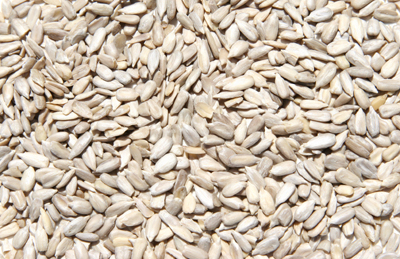
beans or seeds
water & an area for rinsing & draining
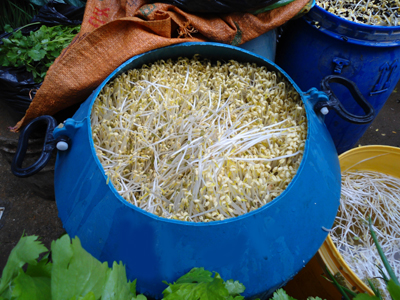
HERE’S HOW TO SPROUT
I’m always looking for the simplest, easiest, “don’t buy anything you don’t have to” approach to life, so I’ll have more time (or money) for other things. Farmer Jay’s interview helped me understand a lot more about sprouting varieties. To begin, I came up with this formula with Farmer Jay’s guidance and help:
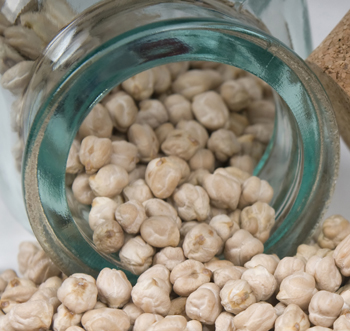
1) Place a cup of garbanzo beans (chick peas) in your container. Many beans and seeds can be used, but these work easily.
WARNING: Kidney bean sprouts are known to be toxic. Choose another variety.
2) Rinse well.
3) Drain the water.
4) Cover the beans with enough filtered water to submerge 2 inches. This way, the beans will continue to be covered when they expand. I have seen 4 parts water to 1 part beans.
5) Rinse the beans after they sit 8 hours or overnight, and return them to the container. No water. The 8 hours of soaking activates growth. It’s amazing.
6) The beans don’t need light. Light will not hurt them, though. They do need to breathe.
I have covered my container with a moist paper towel to replace the cheese cloth I didn’t own so the cats would keep their noses out, but a cover that allows aeration is the only one to be used.
Many U.S. supermarkets sell cheese cloth, a mesh-type fabric that offers aeration. You can place it over the top and fasten it with a rubberband. Then you can turn your jar upside down and let any moisture drain. A plastic colander works well, too, after the soaking phase.
7) Re-rinse the beans 3 X the next day.
8) On the morn of the following day, you may see the beginning of tails. This is good.
9) Re-rinse 3 X that day also.
10) In the morning, rinse the beans again. The tails will be 1/2 inch, give or take.
Farmer Jay says, ”
“You can eat [them] any time once [the] seeds pop open.”
WHY SPROUT?
1) HEALTH. Sprouts are alive. Live food produces enzymes, vitamins and minerals that are necessary for the body. In sprouted form, these powerful nutrients are easier for the body to absorb (bioavailable). Sprouts also increase the protein content in the bean or seed, which is easily digestible as a sprout.
2) SUSTAINABILITY OF SELF AND PLANET. When we grow our own sprouts, we control the process by which this food is grown. We also assist our community in increasing the food stores by creating new food sources that contain rich nutrients for us. Finally, we cut down on the transportation needed to ship sprouts from the grower to us.
3) PERSONAL DEVELOPMENT. By sprouting beans or seeds, we become closer to plants and the land and develop a deeper connection to how they affect our life. Instead of depending upon others to provide all our food, we can experience a small taste of independence from our robotic trip to the food store. We also develop a great respect for the farmer or grower by involving ourselves in this mini-process of growing food.
4) FAMILY ACTIVITY. Growing sprouts is a great process in which to involve the whole family. It brings up many topics of conversation; it is an education process that everyone should experience at a young age and it’s an experience for all ages, from toddler to great grandma.
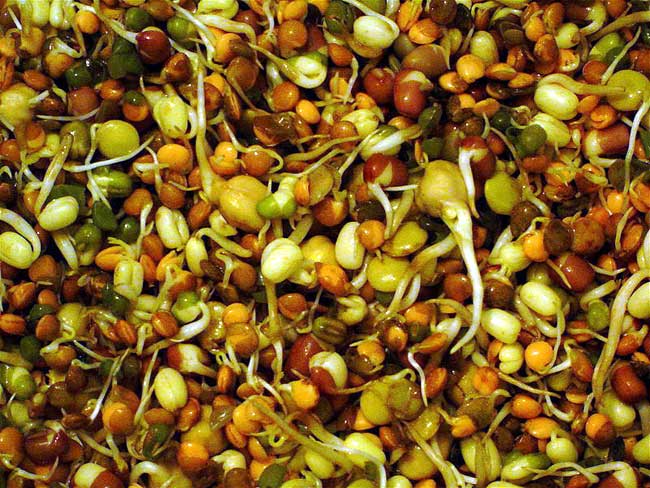 5) TASTE. Sprouts taste good. The texture of sprouted beans is interesting, and they seem sweeter than the beans from which they come, possibly because the cell wall (starch) breakdown produces the enzyme, amylase, which breaks the starch down to simple sugars. It could also be my endorphins kicking in at the thrill of eating what I have grown.
When biting into a sprouted bean, it is soft enough to be pliable but firm enough to be crunchy.
6) ECONOMY. When we sprout on our own, we save money. We also save the country money. One cup of beans or seeds ends up being many cups of sprouts. The amount we pay for the beans is considerably less than the amount we pay for sprouts. By growing our own, we contribute to cutting down the need for transportation for sprout delivery, too.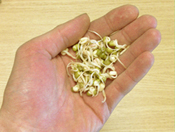
7) WEIGHT LOSS. These tasty little nuggets of nutrition are an excellent snack for weight loss regiments. Calorie sparse and nutrition rich. They can ward off the biggest craving because it’s difficult to overeat them. They are filling and, when grown at home, always available for craving emergencies.
CONCLUSION
After speaking with such a passionate farmer (this is my first interview with any farmer), I see the joy he feels in working the land. I am grateful to have met Farmer Jay who believes very much in his work. He uses my fruit and veggie waste for his animals and his compost pile. I know it goes toward animals who are loved and crops that are farmed with love. Now, if I can get my neighbors to save their fruit and veggie waste and drop it off, that would be progress.
In conclusion, I asked Farmer Jay what he would tell people if he could get one message out. As with most of his other
answers, it was simple and to the point. He said, without hesitation,
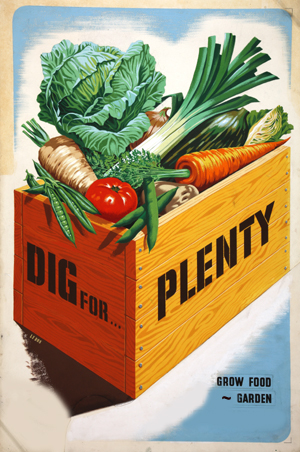
“GROW SOMETHING.”
The message was clear: he wanted people to experience how special it is to grow something, to know that we have the ability to sustain ourselves for our health and for Earth. Or that’s what I heard. And I might have been right. Because when I asked him how he wanted to be remembered, this is what he said,
“I want to be remembered as a steward of the earth.”
Or did he mean “steward of Earth?”
We can all be stewards of Earth through sprouting. Are we ready?
ACTION STEPS
1) Choose a bean or seed that you would like to sprout.
2) Follow the directions above, and sprout your bean or seed.
3) Do a little gratitude dance after you have eaten what you have made. OK, you can clap your hands or exclaim the satisfaction, but dancing for joy is a huge uplifter.
4) If you see any mold in your beans, discard them and start again. Water in the beginning. Air after that.
5) Enjoy the process.
6) Tell someone.
7) Send us a photo. We’ll post it.
FEEDBACK
Please leave a comment and LIKE us.
DIANE GOLD, AUTHOR
Diane Gold, Founder of Warriors of Weight, Turning Habits Into Health, is a mentor in tai chi, kung fu and meditation, a music, fitness and stress expert, dedicated mom, studying plant-based nutrition.
She believes we can learn new things at any time in our lives. She says,
“Although many of us have not grown our own food, it is something to think about. It has never been so obvious that we, the people, each need to take responsibility to stabilize how we live on Earth. 1 small stride is to sprout. Even if it’s only 1 time, it’s 1 step toward self-sufficiency, it minimizes transportation costs, we become a good example for the next generation and we honor the planet. Not bad for an act that takes less than 5 minutes for 2 or 3 days.”
 “…whether organic foods carry a lower risk of cancer because they are less likely to be contaminated by compounds that might cause cancer is largely unknown,” but “vegetables, fruits, and whole grains should form the central part of a person’s diet, regardless of whether they are grown conventionally or organically.”
 ORGANIC, NATURAL OR
  It’s difficult to farm produce without encountering nature’s little bugs that want to eat. In order that these natural organisms don’t eat all the produce, some form of protection in the form of a pesticide, either non-synthetic in organic food or synthetic in non-organic food, must be used.
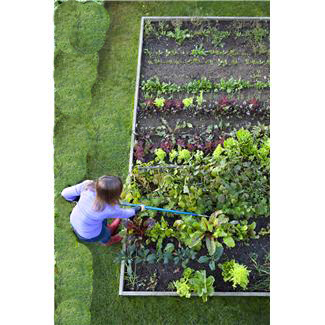 The best way to get our food is to grow our own. Not practical for most of us, and this leaves us with having to dispose of the solids from our juicing. I have happily just connected with a local organic farmer who is willing to take my food waste since I am not a composter. WHOO-HOO! This succeeds in satisfying the responsibility we all have to diminish valuable waste. I am by no means taking a large step toward helping the planet in this regard, but I have taken 1 step.
 People often misunderstand the word “natural.” Anything that is processed minimally and does not contain a substance that does not occur organically (this is the scientific reference to organic meaning the way it grew) in the food is natural. That means pig’s feet are natural, fish broth is natural, apple sauce that does not have other ingredients that must be identified is natural.
 A much misunderstood word, vegan refers to a type of eating that does not include using animal products. That means no honey, no eggs, no dairy, no milk ingredients, anywhere, including in cake or bread or broth, no fish, no poultry, no meat. It does not mean organic. And, as we have mentioned, the word natural is non-specific.
 1) Whole Foods, for 1, talks about all the organic fruits and veggies they supply. Their produce changes from day to day, based upon availability and growing season, and it’s easy to confuse the physical locations of organic and non-organic food (termed “conventional food” so that the negative connotation from the word “non” is avoided). Their juice bar, as of the writing of this article, does not label whether their juice is or is not organic, so that the less informed customers will assume the juice is organic.
 3) We don’t know how fresh the ingredients are that are being used in store-bought juice. Did you know that fruits and veggies only retain their nutrients for a set amount of days? And when some stores, usually supermarkets, get their produce truck; the produce is usually many days or even weeks old?
 4) Finally, having someone serve us means no work for us, and yes pampering for us. Both great. Unless we think of juicing as a fun, joyous activity, which it can be. I just juiced some red cabbage. The color that came out of the juicer made me massively happy instantly. The color seemed so alive that it was much worth any “work” I had to do.
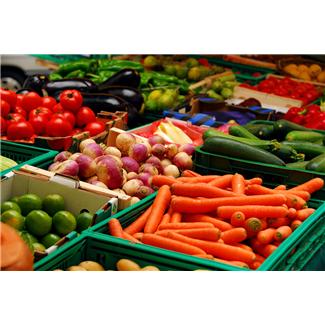 1) We know whether we have purchased organic produce because we inquire when we buy, and we use grocers we can trust. Hopefully, the suppliers of these grocers we trust follow organic protocol in their farming.
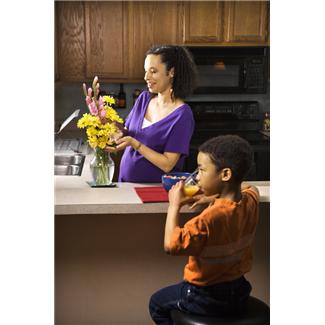 5) We can socialize with our family or relax in our own environment as we drink.
 2)
2)


 I remember lunch time when I was in 5th and 6th grades in New York. We had a record player outside in the school yard. Every day, I would bring my 45 RPM records to class so that we could dance. True, there were so many people singing rhythm and blues and rock and roll, so it was much easier to keep track of the latest and greatest records, as opposed to present day when there are hundreds of new artists coming out every minute because of the ease of technology. It’s great to have such technological access!